

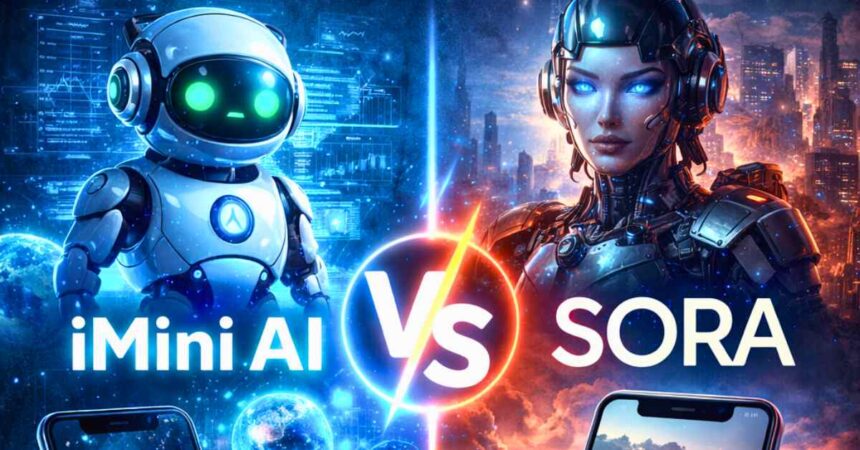
Artificial Intelligence video generation is moving incredibly fast. Just when we get used to one tool, another one pops up promising better results. Two names currently making waves in the AI video space are Sora (by OpenAI) and a newer contender often discussed in tech circles, iMini AI.
If you are a creator, marketer, or just someone who loves playing with new tech, you might be wondering which tool is actually worth your time. Is the hype real? Can these tools actually make high-quality videos from simple text prompts?
In this review, we will break down what each tool offers, their pros and cons, and help you decide which one is right for you. We will also look at some free alternatives if you aren’t ready to spend money just yet.
What is iMini AI?
iMini AI is an emerging tool designed to make video creation accessible to everyone. Unlike some of the heavy-hitters that require powerful computers or complex setups, iMini focuses on speed and ease of use. It is often marketed as a mobile-friendly or lightweight solution for quick content creation.
Key Features:
- User-Friendly Interface: Designed for beginners who don’t have technical skills.
- Quick Generation: Focuses on delivering results fast, often for social media use.
- Templates: often comes with pre-set styles to help you get started immediately.
Strengths
The biggest advantage of iMini AI is accessibility.
You don’t need to be a prompt engineer to get a decent result. It is great for quick, fun videos to share with friends or on TikTok.
Weaknesses
The video quality is generally lower compared to high-end models.
You might notice inconsistent lighting or “glitchy” movements in the characters. It lacks the deep realism that professional filmmakers might look for.
What is Sora?
Sora is OpenAI’s text-to-video model. When it was first announced, it shocked the internet with its ability to create hyper-realistic scenes up to a minute long.
It understands how objects exist in the physical world, which means the videos follow the laws of physics better than most other AI tools.
Key Features:
- High Realism: Creates videos that can sometimes pass for real footage.
- Complex Scenes: Can handle multiple characters and specific types of motion.
- Longer Duration: Capable of generating up to one minute of video while maintaining quality.
Strengths
Sora is a powerhouse. The visual fidelity is stunning. It can generate complex camera moves and highly detailed textures, making it a potential game-changer for creative professionals.
You can read more about the technical details of text-to-video technology on OpenAI’s research page.
Weaknesses
Currently, access is very limited. It is not open to the general public in the same way other tools are.
It also requires significant computing power on the server side, meaning it’s not a “lightweight” tool you can just run on a whim without a subscription or waitlist.
Comparison: iMini AI vs. Sora
So, how do they stack up against each other?
1. Visual Quality
Sora wins this category easily. If you need photorealism, Sora is the clear choice. iMini AI produces content that looks more “AI-generated” or stylized, which is fine for social media but not for professional productions.
2. Ease of Access
iMini AI takes the win here. It is generally more available and easier to jump into. Sora is currently exclusive and harder to get your hands on.
3. Use Case
If you want to make a funny meme or a quick greeting video for a friend, use iMini AI. If you are a filmmaker wanting to create a storyboard or a high-quality stock clip, you would wait for Sora.
Best Free Alternatives
If you can’t access Sora and iMini AI isn’t doing it for you, don’t worry. There are several other free (or freemium) tools you can try right now.
- Runway Gen-2: A very popular tool that allows you to generate videos from text or images. They offer a generous free trial.
- Pika Labs: operates through Discord and is excellent for animating specific parts of an image.
- Stable Video Diffusion: An open-source model that you can run if you have the technical know-how, or access via various hosting platforms.
For a deeper dive into how these generative models work, check out this guide on Generative Adversarial Networks (GANs), which are the foundation for many earlier AI video tools.
Final Verdict
Is iMini AI better than Sora? The short answer is: No, not in terms of quality. Sora is technically superior, creating videos that are leaps and bounds ahead in realism.
However, “better” depends on what you need. If you need a tool you can use today on your phone for a quick social post, iMini AI is the “better” tool for that specific moment because it is accessible. Sora is the future of high-end AI video, but for now, it remains out of reach for most everyday users.
If you are just starting out, try one of the free alternatives like Runway or Pika to get a feel for what AI can do before committing to a paid tool.