
Artificial Intelligence (AI) isn’t just about robots taking over the world or helping you write emails. The internet is currently full of strange, funny, and sometimes slightly creepy AI experiments that show just how creative (and odd) this technology can be. From generating faces of people who don’t exist to talking with historical figures, these tools are pushing the boundaries of what we thought computers could do.
If you are ready to see the stranger side of technology, you are in the right place. We have gathered a list of 10 weird AI websites that will make you question reality, laugh out loud, or simply stare at your screen in amazement.
Let’s dive into the bizarre world of AI.
1. This Person Does Not Exist
This website is exactly what it sounds like. Every time you refresh the page, it uses a complex form of AI called a Generative Adversarial Network (GAN) to create a photo of a person. The catch? That person has never walked the earth. The AI builds facial features—eyes, nose, hair, skin texture—from scratch based on millions of real photos it has studied.
It is weird because the images look incredibly real. You might feel a connection to a smiling face, only to remember it’s just a collection of pixels generated by a machine. It shows how easily AI can mimic human reality, which has big implications for things like profile pictures, stock photography, and even deepfakes.
Visit This Person Does Not Exist
2. Talk to Books
Imagine if you could have a conversation with a library. That is the idea behind Talk to Books. Instead of searching for keywords like a normal search engine, you type in a question or a statement, and the AI scans thousands of books to find a sentence that responds to you naturally. It feels less like searching for data and more like asking a wise friend for advice.
The strange part is how human the responses can feel. You might ask, “What is the meaning of life?” and get a poetic answer from a novel written fifty years ago. It changes how we think about gathering information, moving away from rigid facts and towards exploring ideas and perspectives hidden deep inside literature.
3. Riffusion
We have seen AI generate images from text, but Riffusion takes it a step further by generating music from sound waves that look like images. You type in a prompt like “upbeat jazz in a coffee shop,” and the AI creates a visual representation of sound (spectrogram) and then converts that image into actual audio you can hear.
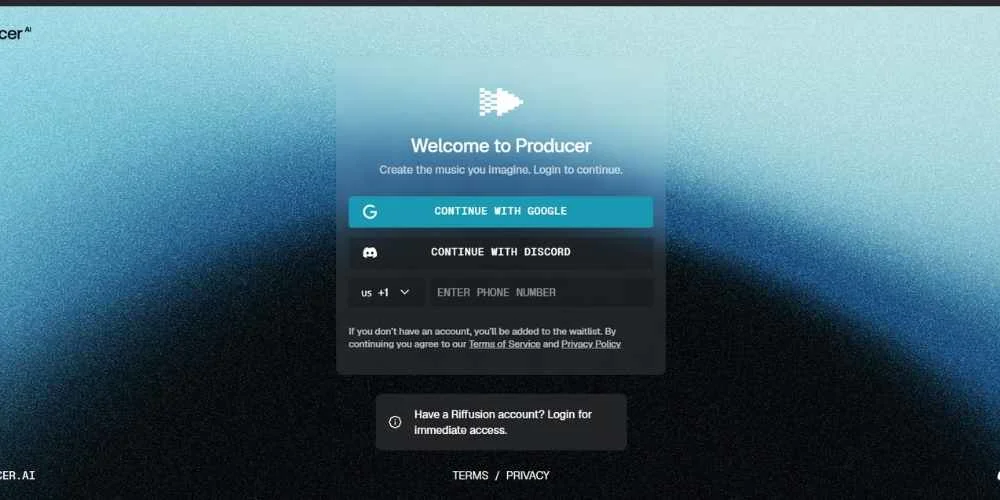
This is weird because it treats music like a picture. It creates infinite loops of music that never existed before, completely on the fly. It suggests a future where we don’t just listen to songs on Spotify, but generate our own custom soundtracks for our lives instantly.
4. Quick, Draw!
This is a game built by Google where you try to draw an object—like a cat, a shoe, or a helicopter—in under 20 seconds, and a neural network tries to guess what it is while you are drawing. “I see a potato… I see a circle… Oh, I know, it’s a clock!”
It feels like a fun game of Pictionary, but you are actually training the AI. Every time you draw, the machine learns more about how humans represent objects. It’s a weirdly addictive way to see how a computer “sees” the world through our messy doodles.
5. Supercook
Have a fridge full of random ingredients and no idea what to make? Supercook uses AI to solve that problem. You simply click on the ingredients you have at home—eggs, obscure spices, that one onion—and it instantly scans the internet to find recipes that use only those items.
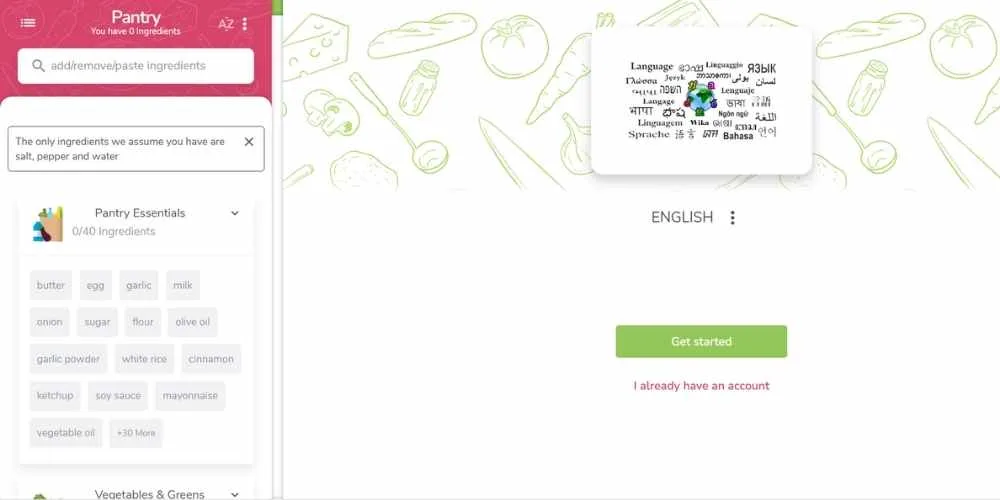
While it is super helpful, it is also a bit strange to see a machine tell you exactly how to act based on your inventory. It creates a personalized menu from chaos, showing how AI can help reduce food waste and make our daily decisions much easier.
6. Craiyon (formerly DALL-E mini)
Craiyon is an AI model that draws images from any text prompt you give it. You can type “Pikachu playing basketball in space” or “a painting of a cat eating a taco,” and within seconds, it generates nine different variations of that idea.
The weird factor here is high. The images are often blurry, distorted, or hilarious interpretations of your words. It shows the messy, dream-like creativity of AI. It’s changing how we think about art and visual content creation, proving that anyone can visualize their wildest thoughts instantly.
7. Fred Di Bona (The AI fortune teller)
There are many AI tarot and fortune-telling sites, but some take it to a new level by simulating a mystic experience. You ask a question about your future, and the AI generates a response based on astrological data or tarot card interpretations.
It is strange because logically, we know it is just code. But the answers can be surprisingly relevant or comforting. It blurs the line between technology and spirituality, showing that people might turn to AI for comfort and guidance, not just facts.
(Note: Specific “Fred Di Bona” sites vary or change, but general AI tarot sites like “AI Tarot” offer similar weird experiences).
8. Character.ai
This platform lets you chat with AI versions of famous characters, celebrities, and historical figures. You can argue with Socrates, get life advice from Elon Musk, or chat with Mario. The AI mimics their personality and speech patterns.
It is definitely weird to have a deep conversation with a computer program pretending to be a dead philosopher. It opens up wild possibilities for education and entertainment, where learning history involves actually “talking” to the people who made it.
9. InspiroBot
If you are tired of those inspirational quote posters with sunsets and mountains, meet InspiroBot. It uses AI to generate an endless stream of inspirational quotes… that make absolutely no sense. It pairs beautiful images with text that is often dark, hilarious, or completely nonsensical.
The weirdness comes from how the AI mimics the structure of wisdom but misses the meaning. You might get a picture of a smiling couple with the text, “The future is just a potato.” It’s a funny reminder that AI doesn’t actually understand human emotion, it just mimics patterns.
10. Teachable Machine
This is a web-based tool that lets you create your own machine learning models quickly, without any coding. You can train your computer to recognize your poses, sounds, or images just by using your webcam and microphone.
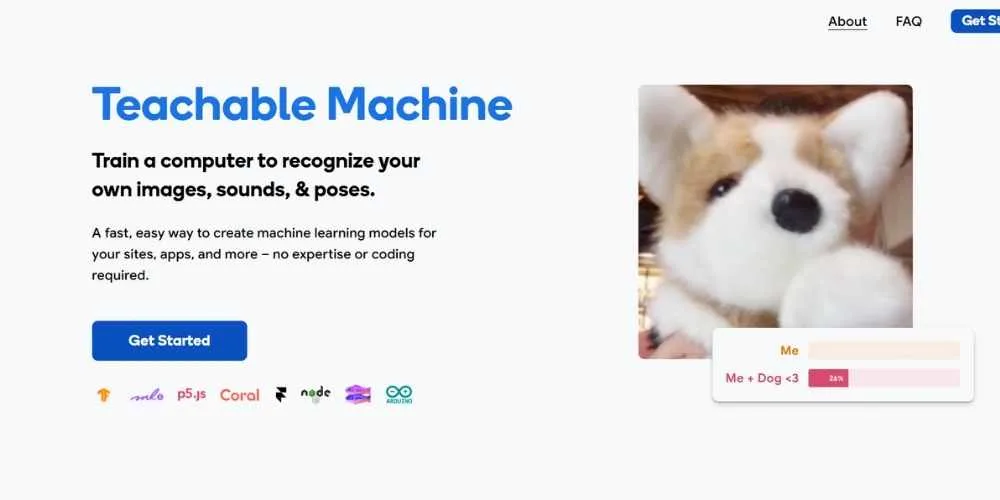
It is strange because it demystifies the “magic” of AI. In five minutes, you can teach your computer to stick out its tongue when you stick out yours. It empowers everyday people to control AI, showing us a future where we build our own smart tools rather than just buying them.
A Future of More AI Website Weirdness
These websites range from useful to completely absurd, but they all share one thing: they show us that the future of AI is not going to be boring. As these tools get smarter, the line between what is real and what is generated by a computer will get blurrier.
So, go ahead and explore these sites. Generate a fake face, compose some weird music, or get a nonsensical inspirational quote. The future is here, and it is definitely weirder than we expected.