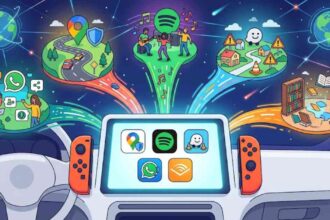


Over the past decade, we’ve rushed from information scarcity to catastrophic excess. However, the amount of data has never been a problem; rather, we’ve encountered a phenomenon that cognitive scientists call “interface inflation.”
While we debate the power of neural networks, the very principles of interacting with technology are quietly changing how our brains work. For instance, the brain can release dopamine when rewarded with a Mostbet bonus to feel the bet.

Living in a Fast Lane of IT Tech
Why do modern IT solutions make us faster, yet also more superficial? The thing is that most cutting-edge apps—from Slack to YouTube—are designed using the principles of “behavioral design.”
The main challenge of today is that apps try to retain your attention at all costs. Generally, our brain generates dopamine in anticipation of new information, even if that information is useless.
Consequently, the skill of deep work is practically stolen from our lives. The average developer, for instance, switches contexts every 6-11 minutes. After each context switch, the brain needs up to 20 minutes to return to its peak concentration.
What happens to average users then? With constant notifications, we’re virtually never working at 100% of our processor’s capacity.
Memory Erosion and the “Google Effect”
With the advent of cloud storage and instant search, we’ve become less prone to memorizing facts. Why remember function syntax when you can use Copilot or Stack Overflow?
This is called “digital amnesia.” Our brains are incredibly lazy biological machines; they stop wasting energy on long-term data storage if it is accessible in a couple of clicks.
However, there’s a catch. Innovation is born at the intersection of ideas already stored in your head. If all your knowledge is “in the cloud,” your brain has no foundation for creating rare associations.
Interfaces as Cognitive Crutches
Modern UI/UX strives to be “seamless” and “intuitive.” At first glance, this seems like a blessing. However, there’s a downside: the lack of resistance kills seeing the bigger picture.
When an interface makes choices like suggesting canned responses in email, code autocompletion, or personalized feeds, we enter a state of “cognitive ease.”
In this state, we’re more likely to make errors, stick to superficial judgments, and succumb to manipulation. True learning and development always involve “cognitive strain”—a moment of difficulty.
By simplifying interfaces to the point of excess, corporations deprive us of the opportunity to train our brains while working.
How to Set Up a Smart Environment

If you are eager to maintain mental clarity in a world of technological noise, it’s time to shift from passive consumption to active design of your digital environment.
1. Architecture of Silence
First, put intrusive notifications on hold. Notifications should only come when a real person is messaging you. Likes, app updates, news—all of this should be hidden. Use Focus Mode on iOS or Android, not as an exception, but as a routine part of your everyday grind.
2. The Second Brain Principle
Don’t try to compete with Google in storing facts, but compete in making them structured. Use tools like Obsidian, Notion, or Roam Research to build your own knowledge network. Saving links may not be the best idea, but rewriting ideas in your own words is. Such practice helps create those neural connections that are lost during regular searches.
3. Technological Asceticism
Separate your devices by task. You might look through long reads on e-readers (without notifications) but write code on a clean desktop without social media tabs. Practice a “digital detox” once a week—at least 12 hours without screens to let self-reflection happen.
The Future: Symbiosis or Absorption?
We stand on the threshold of the era of neural interfaces and ubiquitous AI. The line between “my thoughts” and “an algorithm’s prompt” will blur. In this environment, the most valuable resource will not be information or even intelligence, but one’s attention span.
Someone who can maintain focus on a single task for three hours straight will be worth many times more than any “multitasker” trained only to click links. Technology is a powerful exoskeleton for the mind, provided that it contains a living, trained, and autonomous intelligence.
The Bottom Line
Technology makes our lives easier, but our task is not to let ourselves merge with it. Stick to IT tools to expand your capabilities and talent, not to replace your brain potential.